Play Italy
Across Italy, there are places where the past is not hidden behind museum glass but under your feet. Ancient Roman roads still cross the countryside, cut through archaeological parks, and quietly frame modern landscapes. Walking along these routes today means stepping onto stones laid more than two thousand years ago - part of an infrastructure that once connected an empire.
From Rome’s iconic Via Appia Antica to lesser-known stretches preserved in archaeological sites, these roads reveal how Romans moved armies, goods, and ideas across the peninsula. For travelers, they also offer a rare experience: the chance to follow the same paths once traveled by merchants, soldiers, and pilgrims.
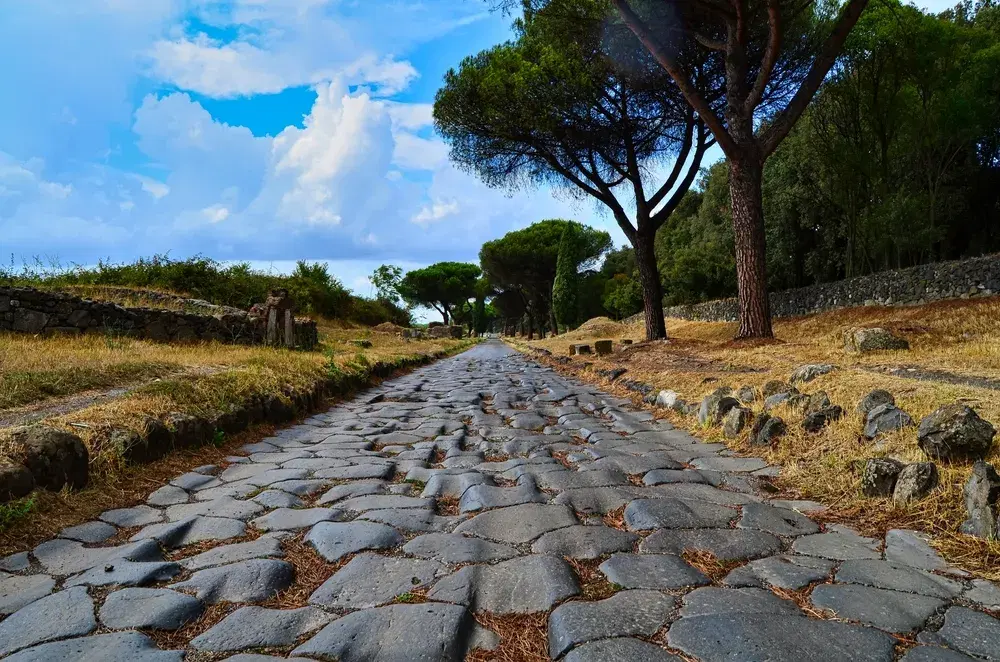
Can you still walk Roman Roads in Italy Today?
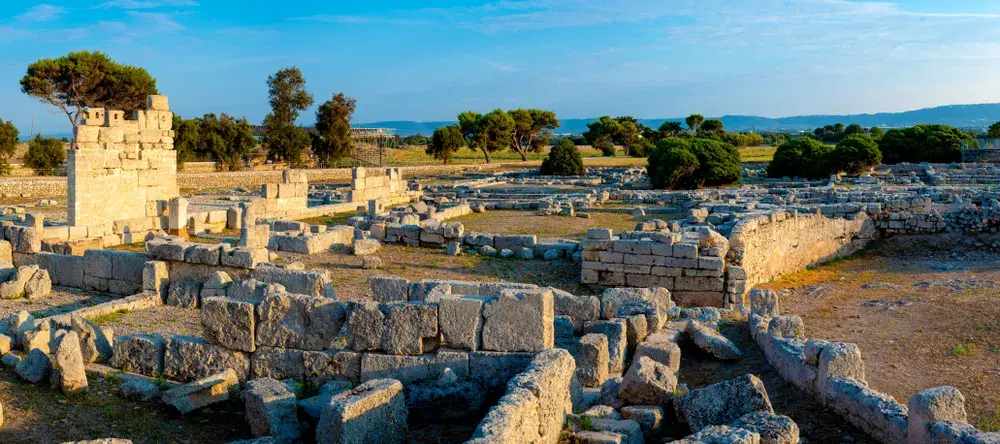
Yes. Several sections of ancient Roman roads remain accessible and walkable across Italy. The most famous example is the Via Appia Antica near Rome, but preserved stretches also appear in archaeological areas such as Carsulae in Umbria, Ostia Antica near Rome, and Egnazia in Puglia.
These locations allow visitors to experience Roman infrastructure directly. Original paving stones, roadside monuments, and traces of ancient cities still align along these historic routes. In many cases, the surrounding landscapes have changed little, preserving the feeling of traveling through time.
For modern travelers, the experience is remarkably accessible. Many of these sites can be explored during half-day or full-day excursions from major destinations such as Rome, making them ideal additions to a cultural itinerary.
The Via Appia: Italy’s Most Iconic Roman Road
The Via Appia, often called the Regina Viarum - the Queen of Roads, is the most famous Roman road still visible today. Construction began in 312 BCE, when the Roman statesman Appius Claudius Caecus ordered the route built to connect Rome with southern Italy.
Over time, the road extended more than 800 kilometers, eventually reaching the port city of Brindisi, which served as Rome’s gateway to Greece and the eastern Mediterranean.
In 2024, the Via Appia was officially inscribed as a UNESCO World Heritage Site, recognizing its extraordinary historical and engineering significance. The designation highlights not only the road itself but also the broader cultural landscape surrounding it.
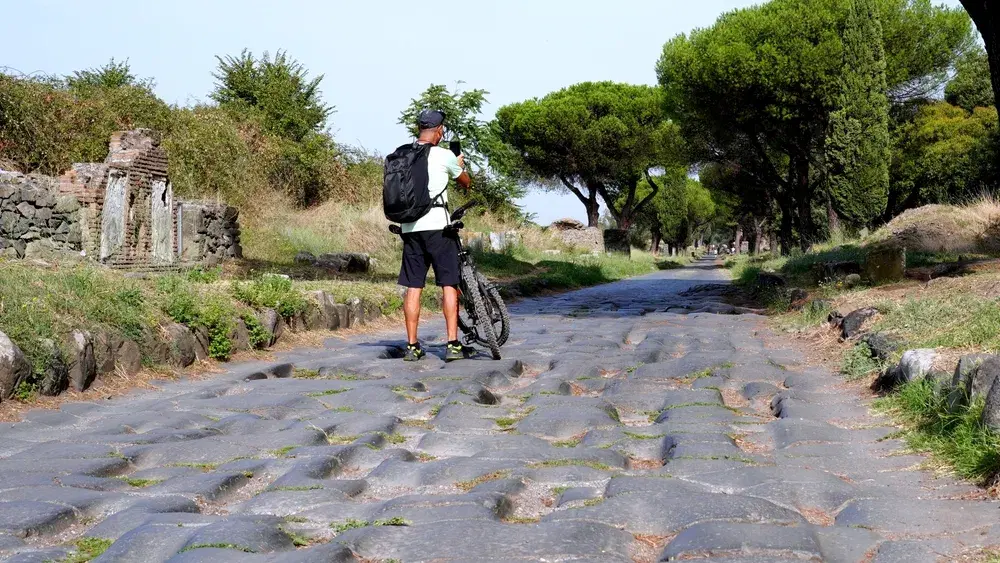
Where to Walk the Via Appia Today
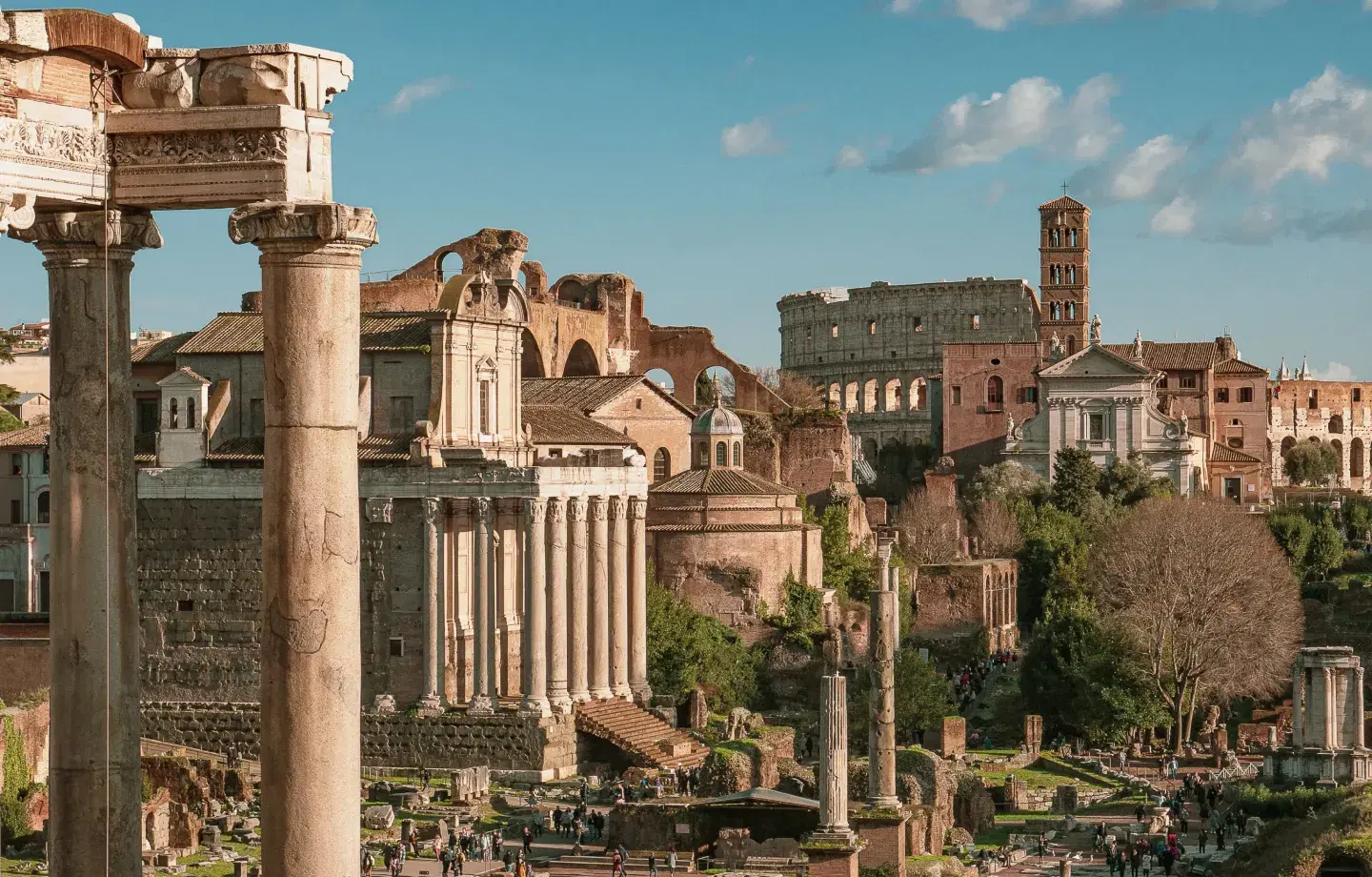
The best preserved and most atmospheric section lies just outside Rome inside the Parco Regionale dell’Appia Antica.
Here visitors can walk along:
- Original basalt paving stones
- Ancient Roman tombs and mausoleums
- Early Christian catacombs
- Ruins of villas and aqueducts
Tall umbrella pines line parts of the road, and traffic is limited in many areas, creating a surprisingly peaceful environment only a short distance from central Rome.
For explorers staying in the capital, visiting the Via Appia often becomes one of the most memorable historical experiences of the trip. It reveals Rome not as a collection of monuments but as a living network of movement and power.
Travelers who want to explore Rome’s ancient world in depth often combine the Appia with a guided experience such as our Rome: Tour of the Eternal City, which connects the city’s most important archaeological landmarks into a single, coherent story.
Via Flaminia and the Silent City of Carsulae
In the green hills of Umbria, another Roman road tells a quieter story.
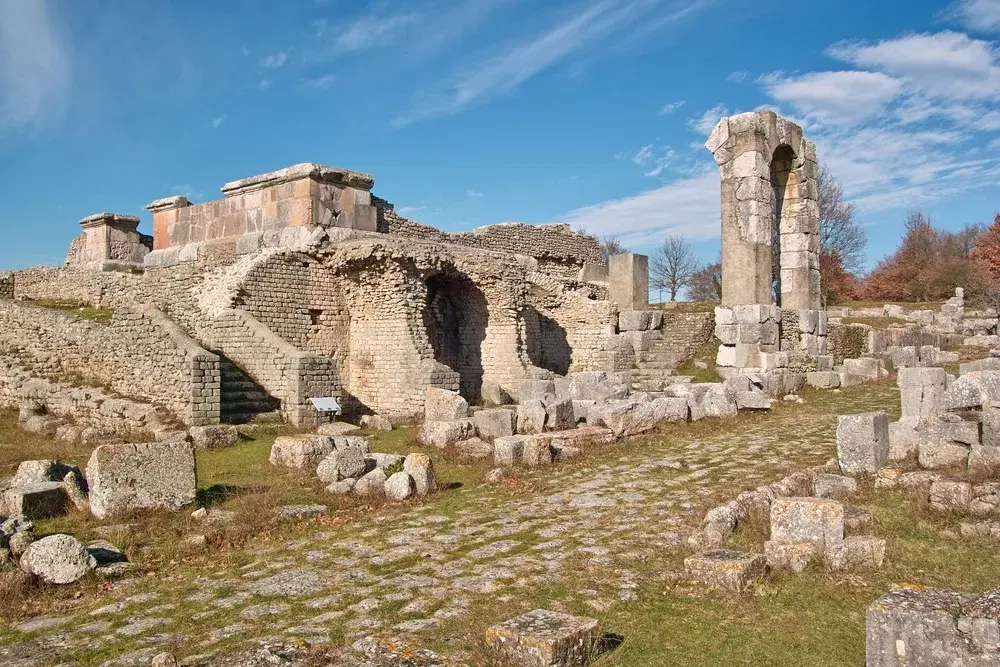
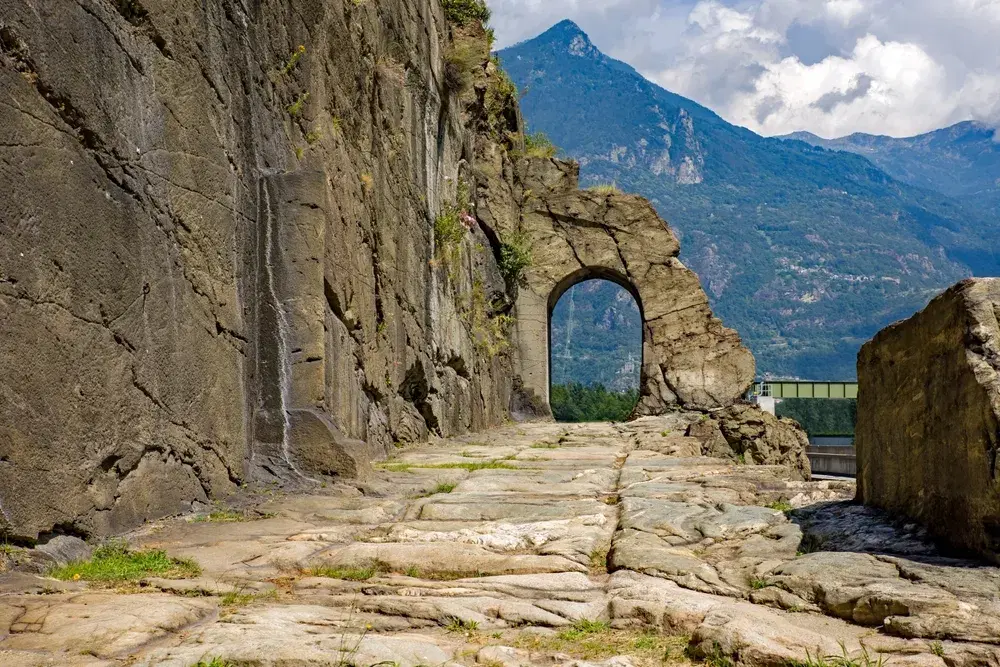
The Via Flaminia, built in 220 BCE, connected Rome with the northern Adriatic coast. Along this route rose the Roman town of Carsulae, now preserved as an atmospheric archaeological site where the ancient road still runs through the city.
Visitors walking through Carsulae can still see:
- The original stretch of the Via Flaminia
- A monumental Roman arch
- The remains of a forum and basilica
- An ancient theater and amphitheater
Unlike busier archaeological sites, Carsulae remains remarkably peaceful. The surrounding countryside and open layout allow visitors to experience the Roman landscape at a slower rhythm.
Ostia Antica: Where the Roads of Rome Met the Sea
While many Roman roads connected distant provinces, they all ultimately converged on Rome. One of the most important destinations within that network was Ostia, the city’s ancient port.
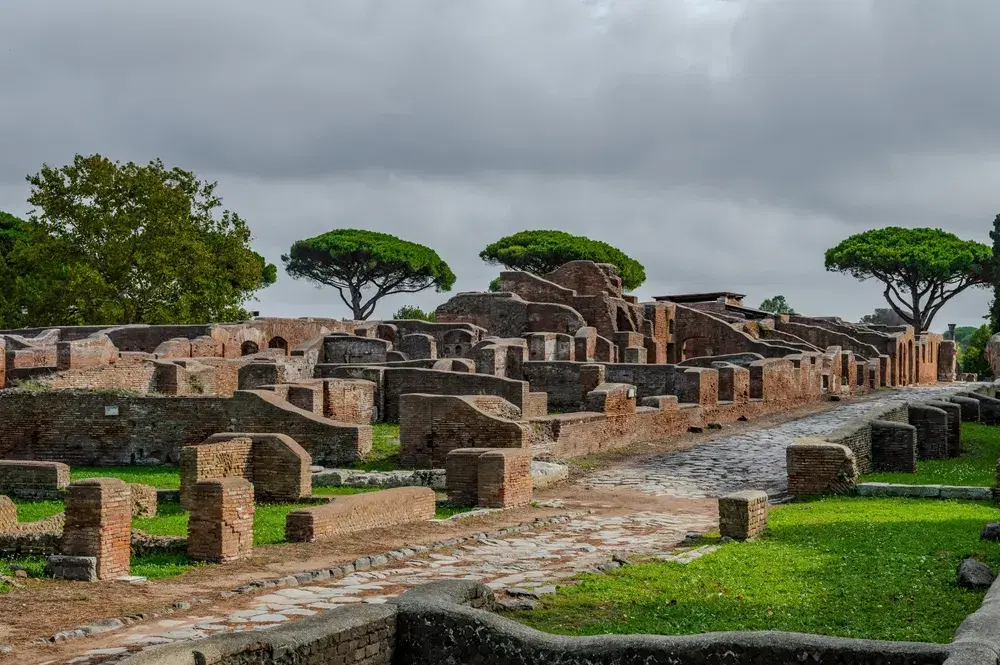
Located about 30 kilometers from Rome, Ostia Antica preserves an entire Roman urban landscape, including the streets that carried goods arriving from across the Mediterranean.
Walking through Ostia today reveals:
- Stone streets worn by centuries of carts
- Large warehouses used for grain storage
- Markets, taverns, and apartment buildings
- A remarkably intact Roman theater
Here the story of Roman roads shifts from imperial expansion to daily life. The streets once carried olive oil from Spain, marble from Greece, and grain from North Africa - all destined for the capital.
Via Traiana and the Adriatic Gateway of Egnazia
In southern Italy, another important Roman route emerges along the Adriatic coast: the Via Traiana.
Built during the reign of Emperor Trajan in the 2nd century CE, the road improved connections between southern Italy and the eastern Mediterranean. It provided a faster route toward the port of Brindisi, where travelers embarked for Greece and the eastern provinces.
One of the most evocative places to see traces of this road today is the archaeological park of Egnazia in Puglia.
Here visitors can explore:
- Sections of the ancient Roman road
- The ruins of a Roman forum
- Early Christian basilicas
- A coastline that still reflects the region’s ancient maritime connections
Today, travelers exploring the region can encounter these traces of Roman infrastructure while discovering the wider cultural landscape of southern Italy.
Experiences such as the Puglia Grand Tour: Villages, History and Flavors of Southern Italy combine archaeological sites, coastal scenery, and historic towns into a deeper exploration of this remarkable region.
Why Roman Roads Still Matter Today
Roman roads shaped Italy’s geography for centuries. Many modern highways and travel routes still follow the logic established by Roman engineers more than two millennia ago.
For travelers, exploring these ancient roads offers something unique: a way to experience history not as isolated monuments but as a connected landscape.
The stones, cities, and archaeological parks that survive along these routes remind us that the Roman world was built on movement - on the ability to link distant regions into a shared cultural and economic system.
And remarkably, those connections are still visible today.
Planning your Experience: Why Guidance Makes the Difference
Many Roman road sites are located just outside major destinations but require thoughtful planning to experience fully.
Travelers often face practical questions:
- Which sections are best preserved?
- How much time should you dedicate?
- Which sites are easiest to combine in one day?
A curated itinerary can transform these locations from scattered ruins into a coherent historical journey.
For example, exploring the Via Appia and Ostia Antica from Rome, or discovering the archaeological landscapes of Puglia, becomes far more rewarding with the right pacing, transportation, and expert interpretation.
This is where Play Italy Travel Designers can help shape a seamless experience - ensuring that logistics remain effortless while the history remains vivid and meaningful.
For travelers who want to experience multiple regions connected by history, longer itineraries such as Italy in 17 Days: Culture, Discoveries and Surprises recreate the spirit of these ancient routes - moving across the peninsula from one cultural landscape to another.
Your unforgettable Italian Journey awaits with Play Italy
Here at Play Italy, we are dedicated to transforming your exploration of Italy’s natural wonders into a seamless and unforgettable experience. Whether you’re marveling at the majestic peaks of the Dolomites, relaxing by the serene waters of Lake Como, savoring the rolling hills of Tuscany, or soaking in the stunning coastal views of the Amalfi Coast, our Travel Designer service is here to tailor your adventure to your tastes. Through a dedicated free call, you can speak directly with one of our Travel Designers and begin shaping a journey that reflects your pace, preferences, and expectations. We ensure that each moment is not just seen, but truly experienced.
For more inspiration on how to weave these natural delights into your travel itinerary, we invite you to subscribe to our Play Italy newsletter. By joining our community, you’ll receive expert travel tips, seasonal insights, and early access to what’s coming next - along with a special discount code to use on your first journey with us. If you’re considering a journey and would like to explore it with us directly, you’re always welcome to get in touch via email or WhatsApp to start a personal conversation.
Choose one of our itineraries and let Play Italy open the door to a world where each sight is a story and each landscape becomes a lasting memory. Come play with us, and let us turn your Italian holiday into a refined, meaningful experience. Your dream of Italy awaits - let’s bring it to life, together.
Rome: tour of the Eternal City
4.5
3 days 2 nights
1 Destinations
From $1,077
in double room
Puglia Grand Tour: Villages, History and Flavors of Southern Italy
7 days 6 nights
7 Destinations
From $3,269
in double room

Rome: art, history and pizza
4.2
5 days 4 nights
2 Destinations
From $2,678
in double room

Italy in 17 days: culture, discoveries and surprises
17 days 16 nights
17 Destinations
From $6,823
in double room
Rome: the classics views of Rome
4.8
4 days 3 nights
1 Destinations
From $976
in double room