Play Italy
Tuscany and wine are almost inseparable in the imagination of travelers coming to Italy.
Chianti, Brunello, vineyard-covered hills: they are famous for a reason. But stop there, and you miss how radically Italian wine changes from one part of the country to another.
In Piedmont, the hills around Alba are shaped by Nebbiolo and long lunches. In Lombardy, Franciacorta produces some of Italy's most refined sparkling wines just a short distance from Lake Iseo. In Veneto, the Prosecco Hills climb toward the Dolomites. Further south, vines grow on the volcanic slopes of Mount Etna, while inland Campania produces wines many visitors never encounter on the coast.
There is no single Italian wine country.
There are dozens of them.
And if wine is going to be part of your trip, the real question is not simply where the best wine is made. It is which wine region makes sense for the journey you want to take.
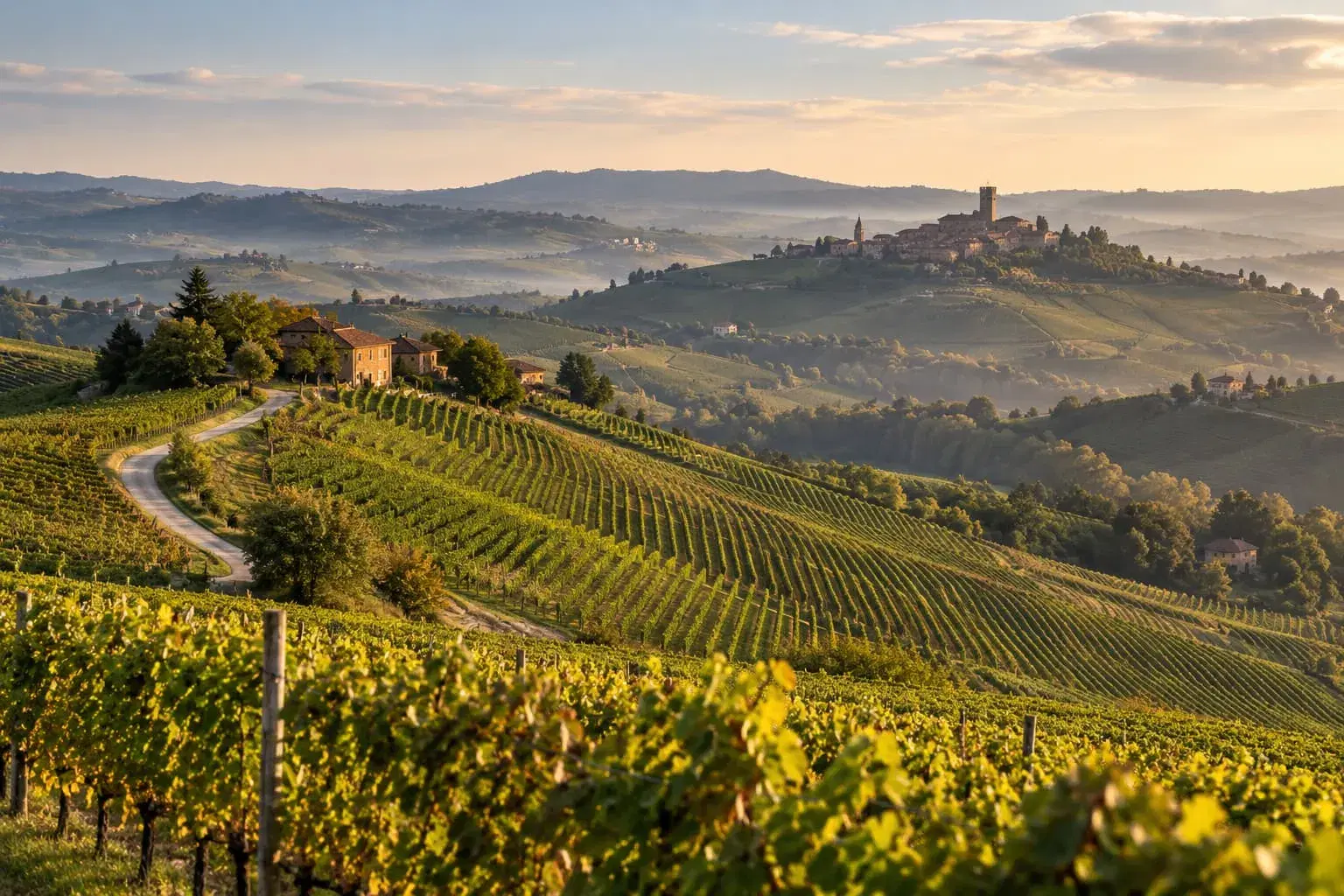
Langhe, Piedmont: Where Wine and Food Are Almost Impossible to Separate
For travelers who think first of serious red wine, Piedmont is one of the most natural places to begin.
The Langhe hills around Alba are home to Barolo and Barbaresco, two of Italy's most celebrated Nebbiolo wines. But once you are there, the experience quickly becomes bigger than the labels.
Small hill towns, vineyards, hazelnuts, truffles and some of northern Italy's strongest food traditions all exist within the same landscape. Wine is not something you stop to taste before moving on to the next attraction. It is part of the rhythm of the region.
Barbera d'Alba and Dolcetto d'Alba are also worth paying attention to, especially if you want to see a less prestige-driven side of the region's wine culture rather than focusing only on its most famous bottles.
Alba makes a particularly convenient base, allowing you to explore towns such as Barolo, La Morra, Monforte d'Alba, Neive and Barbaresco without constantly changing hotels.
For a deeper look at Italian reds before deciding where to travel, our Best Italian Red Wines to Try This Fall & Vino Novello guide explores some of the wines you are likely to encounter along the way.
And if the Langhe feel like your kind of Italy, our Italian Langhe Wine Tour: Barolo, Barbaresco & Luxury Experiences brings wine, food and the surrounding countryside together in one journey.
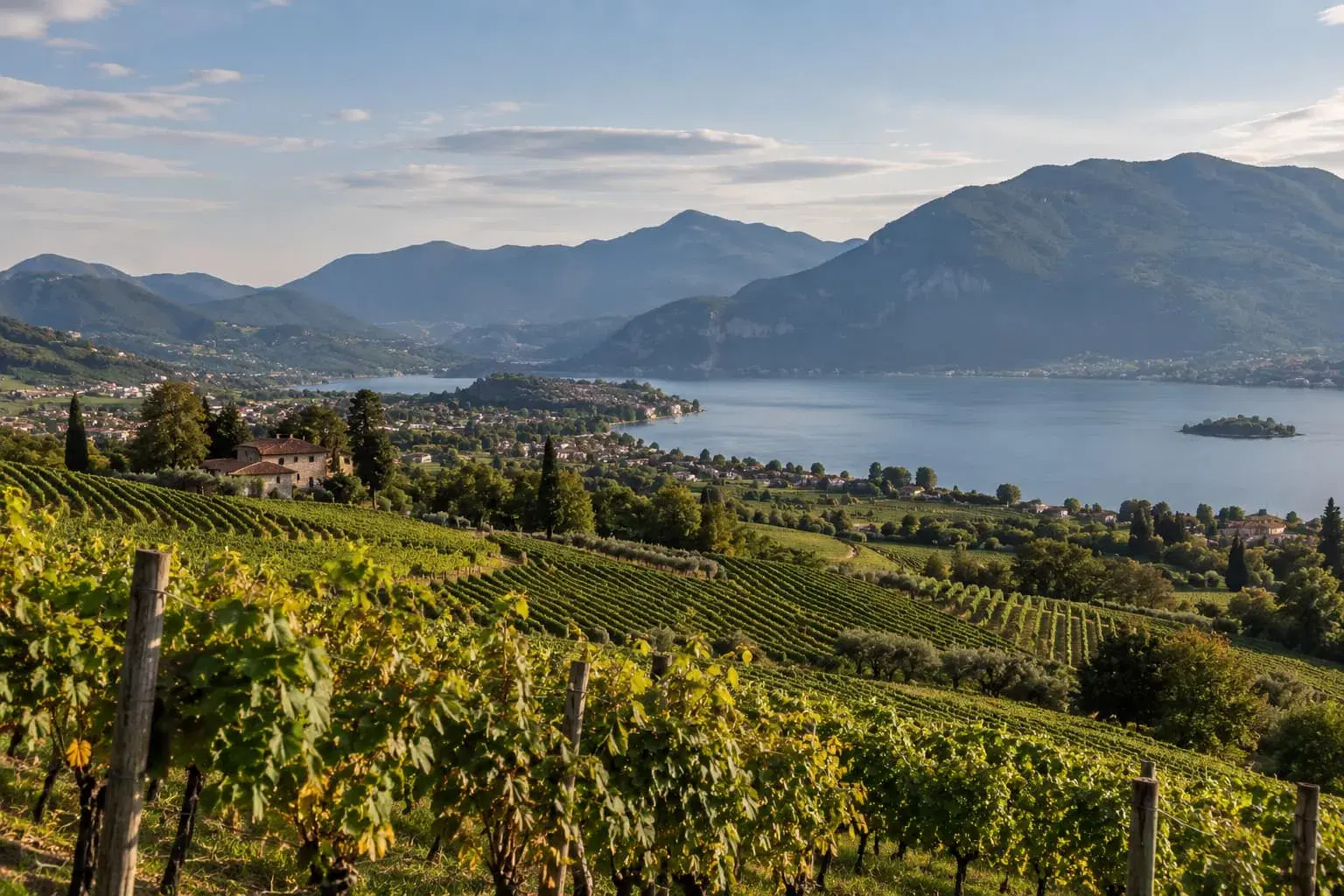
Franciacorta: Italy's Sparkling-Wine Region That Still Feels Under the Radar
Prosecco is globally familiar.
Franciacorta offers a very different experience.
Located in Lombardy, close to Lake Iseo and on a natural northern Italy route between Milan and Verona, Franciacorta is known for sparkling wines produced through secondary fermentation in the bottle.
The result is not simply "another Italian sparkling wine." The style, production and atmosphere are quite different from what many travelers associate with Prosecco.
Visiting Franciacorta also makes sense geographically.
The wine country sits among vineyards, small towns and the landscapes surrounding Lake Iseo, which means it can become part of a wider northern Italy trip rather than requiring a dedicated wine vacation.
For travelers already moving between Milan, the lakes and Verona, that matters.
Our Verona & Franciacorta: A Journey Through Italy's Wine Excellences follows exactly this logic, combining wine with a route that already makes sense on the map.
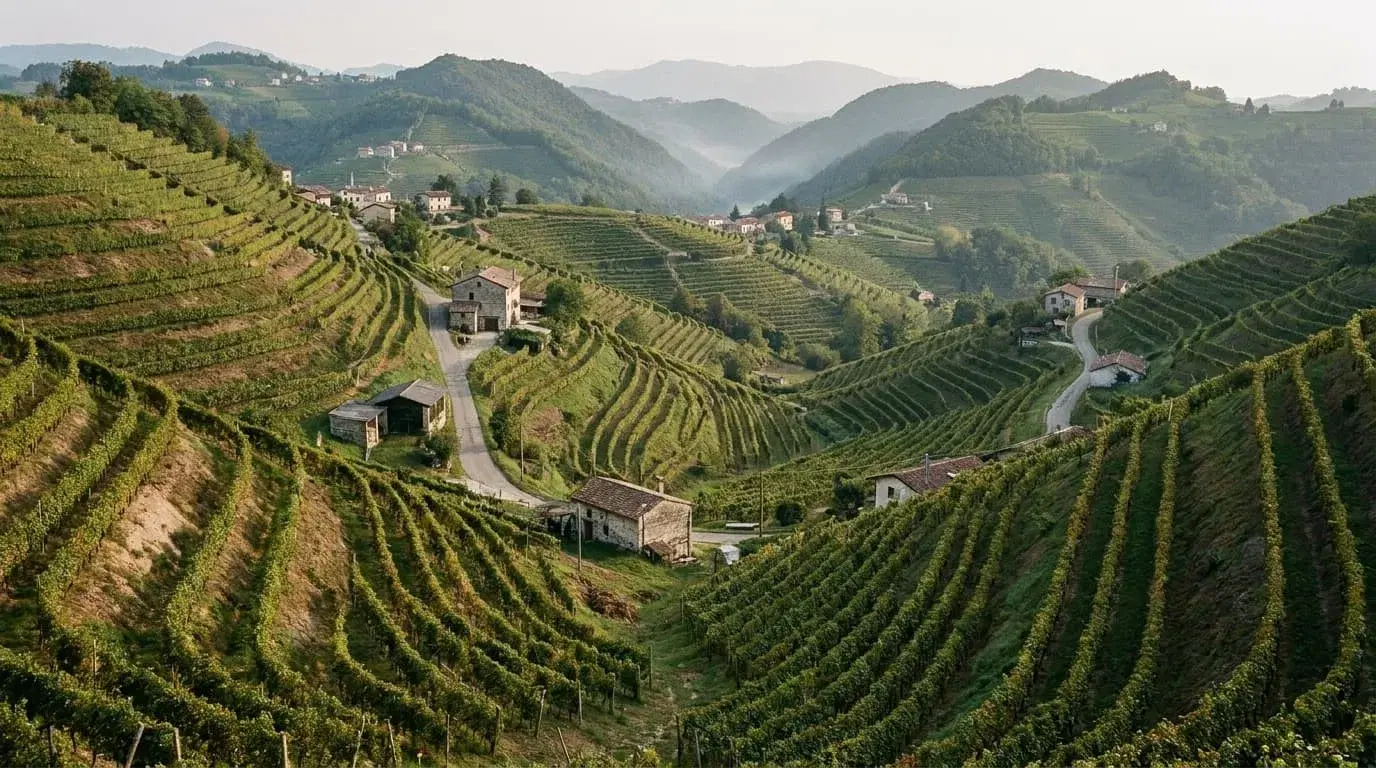
The Prosecco Hills: Go Beyond the Name on the Bottle
Prosecco may be one of the best-known Italian wines abroad, but the landscape behind it is much less familiar.
Between Conegliano and Valdobbiadene, vineyards climb steep hills between small towns and narrow rural roads. This is the historic production area of Conegliano Valdobbiadene Prosecco Superiore DOCG and part of a UNESCO-listed cultural landscape shaped by centuries of viticulture.
Coming here changes the way you understand the wine.
Instead of seeing Prosecco simply as something served at aperitivo, you begin to see the villages, slopes and farming traditions behind it.
The Prosecco Hills also have one major advantage for travelers: they fit beautifully into a larger itinerary.
Venice lies to the south. The Dolomites rise to the north.
That means a trip can move naturally from art and canals to vineyards and then to mountain scenery, without feeling like you have stitched together unrelated destinations.
Our Venice, the Prosecco Hills and the Dolomites: From the Sea to the Mountains itinerary is built around exactly that progression.
Franciacorta or the Prosecco Hills: Which One Makes More Sense for Your Trip?
If you love sparkling wine, choosing between Franciacorta and the Prosecco Hills should not come down to which name you recognize.
They create completely different journeys.
Franciacorta makes more sense if the wine experience itself is a priority. Cellar visits, traditional-method sparkling wines and the proximity of Lake Iseo create a slower, more wine-focused stay. It also works particularly well when Milan, Verona or Lake Garda are already part of the itinerary.
The Prosecco Hills, on the other hand, are ideal if wine is one layer of a more varied route. They pair naturally with Venice and the Dolomites and offer a stronger sense of movement between city, countryside and mountains.
Neither is "better."
The right answer depends on what you want the rest of your trip to look like.
Collio, Friuli Venezia Giulia: For Travelers Who Prefer White Wine
Italy is often introduced to wine travelers through its reds.
Friuli Venezia Giulia is a good reminder that the country's white-wine culture can be just as distinctive.
In Collio, near the Slovenian border, white wines take center stage. Friulano and Ribolla Gialla are two of the area's signature varieties, alongside Sauvignon and Pinot Bianco. The wines reflect a borderland landscape and food culture shaped by Italian, Slavic and Central European influences.
The pace is quieter too.
For travelers returning to northern Italy who have already seen Venice, Florence and the major lakes, Collio offers something more understated: smaller producers, green hills, local cooking and a wine culture that still feels strongly connected to place.
Cormons, the main center of the Collio area, is a practical starting point for exploring the surrounding wine country.
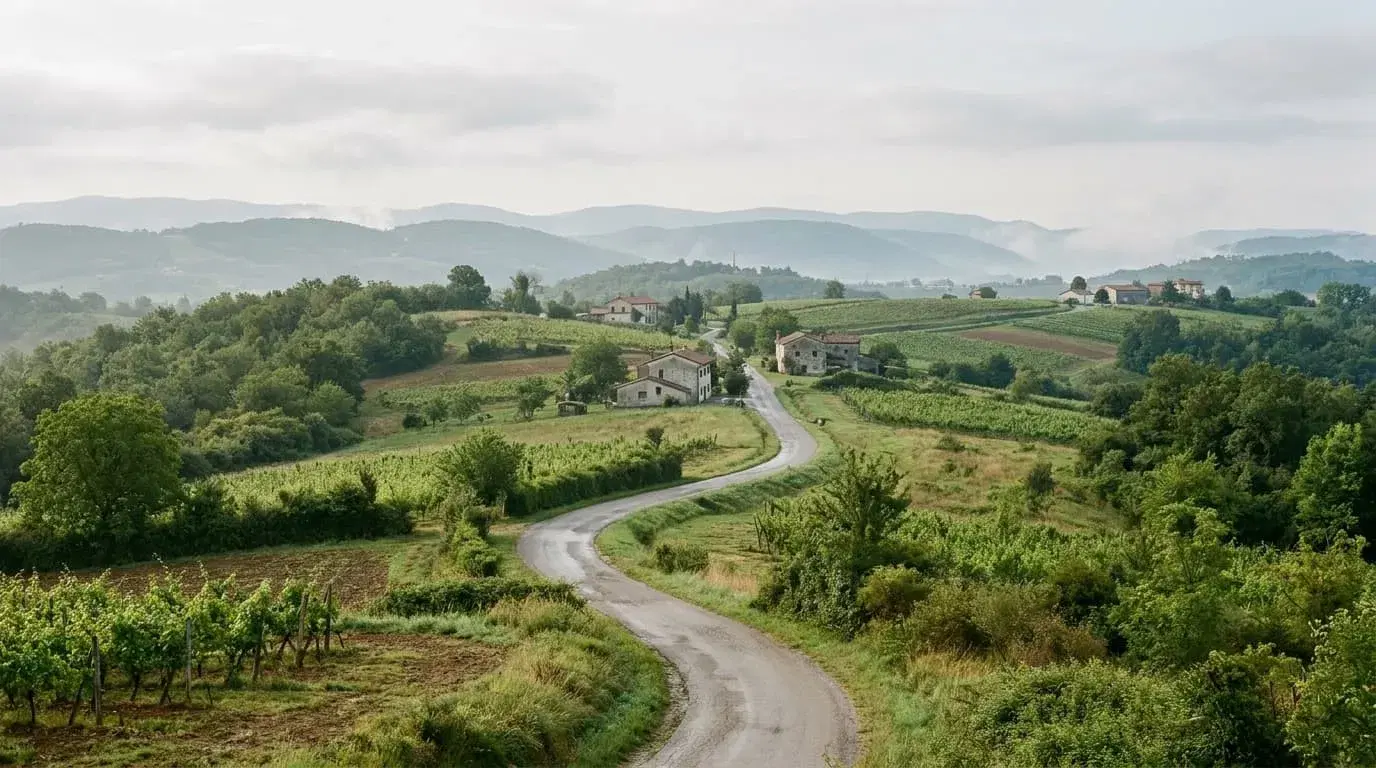
Etna, Sicily: Wine Shaped by a Volcano
Few Italian wine regions are as visually distinctive as Etna.
Vineyards grow on the volcanic slopes of Mount Etna at different elevations. Nerello Mascalese is the principal native red grape of the area, while Carricante is central to its white wines.
But what makes Etna particularly compelling for travelers is the landscape itself.
Dark lava, green vineyards, mountain air and views toward the Sicilian coast make wine feel inseparable from the environment that produces it.
It is also surprisingly easy to integrate into a wider Sicily trip.
Travelers staying in Taormina or Catania can spend time around the volcano without giving up the archaeological sites, towns and coastline that usually draw them to eastern Sicily in the first place.
Our Sicilian Harvest Tour: Nero d'Avola, Etna Wines & Vineyard Experiences explores this relationship between landscape, local traditions and wine.
And if you are visiting Italy during harvest season, our Fall Festivals in Italy: A Celebration of Harvest and History looks more broadly at how autumn changes food and wine culture across the country.
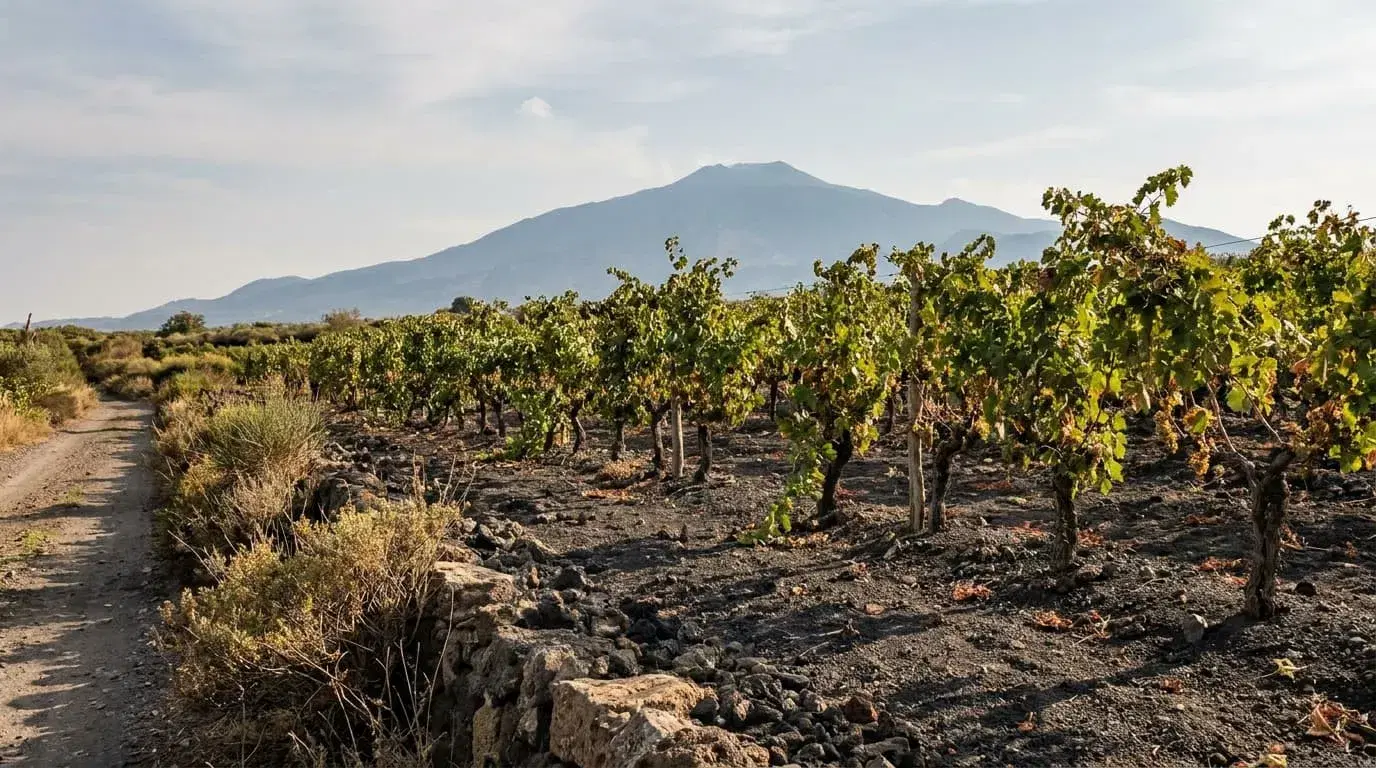
Irpinia, Campania: The Wine Country Behind the Coast
For most international travelers, Campania means Naples, Pompeii, Capri and the Amalfi Coast.
Travel inland and the atmosphere changes quickly.
Irpinia is home to Fiano di Avellino DOCG, Greco di Tufo DOCG and Taurasi DOCG, built around three native grapes: Fiano, Greco and Aglianico.
The landscape becomes rural. Towns become smaller. Wine and food replace the Mediterranean coastline as the central experience.
This is exactly why Irpinia can work so well in a longer Campania itinerary.
After several days around Naples or the Amalfi Coast, going inland gives the journey contrast rather than simply adding another stop.
It also reinforces something that is true across Italy: regional wine makes the most sense when you experience it alongside regional food.
Our Taste of Italy: Must-Try Regional Dishes & Delicacies goes deeper into how dramatically Italian cuisine changes as you move from one part of the country to another.
So, Which Italian Wine Region Should You Actually Choose?
Start with what you want the trip to feel like.
If you imagine Barolo, truffles, long meals and rolling hills, choose the Langhe.
If sparkling wine and cellar visits are the main event, Franciacorta deserves serious consideration.
If you already know you want to see Venice and the Dolomites, the Prosecco Hills fit naturally between the two.
If white wine is what excites you most, Collio is one of the strongest alternatives to Italy's better-known red-wine destinations.
If you want a region where the landscape itself is part of the wine experience, Etna is hard to beat.
And if your itinerary already includes Naples or the Amalfi Coast, Irpinia gives you an opportunity to discover a side of Campania most first-time visitors never see.
The important part is not trying to visit every famous wine region.
It is choosing the one that belongs in your version of Italy.
How We Build Wine Into a Larger Italian Journey
One of the most common mistakes with wine travel is trying to fit too much into one day.
Four wineries may look achievable on a map. In reality, tastings run long, lunches are meant to be enjoyed and rural roads rarely reward rushing.
Two thoughtful visits, a good lunch and enough time to actually see the landscape often create a much better day.
Advance planning matters too. Many winery experiences are by reservation, and transportation deserves some thought. Once tastings are involved, a private driver or locally planned transfer is usually more relaxed than managing the route yourself.
Season can change the experience too.
Harvest brings activity to regions such as Piedmont and Sicily, while the quieter months offer a completely different atmosphere in the cellar. If you are considering traveling outside the busiest season, our Winter Wine Tasting in Italy: Best Vineyards & Cellars to Visit guide explains what changes once the crowds thin out.
The goal is not to build a trip around as many tastings as possible.
It is to make wine part of a journey that still feels like Italy.
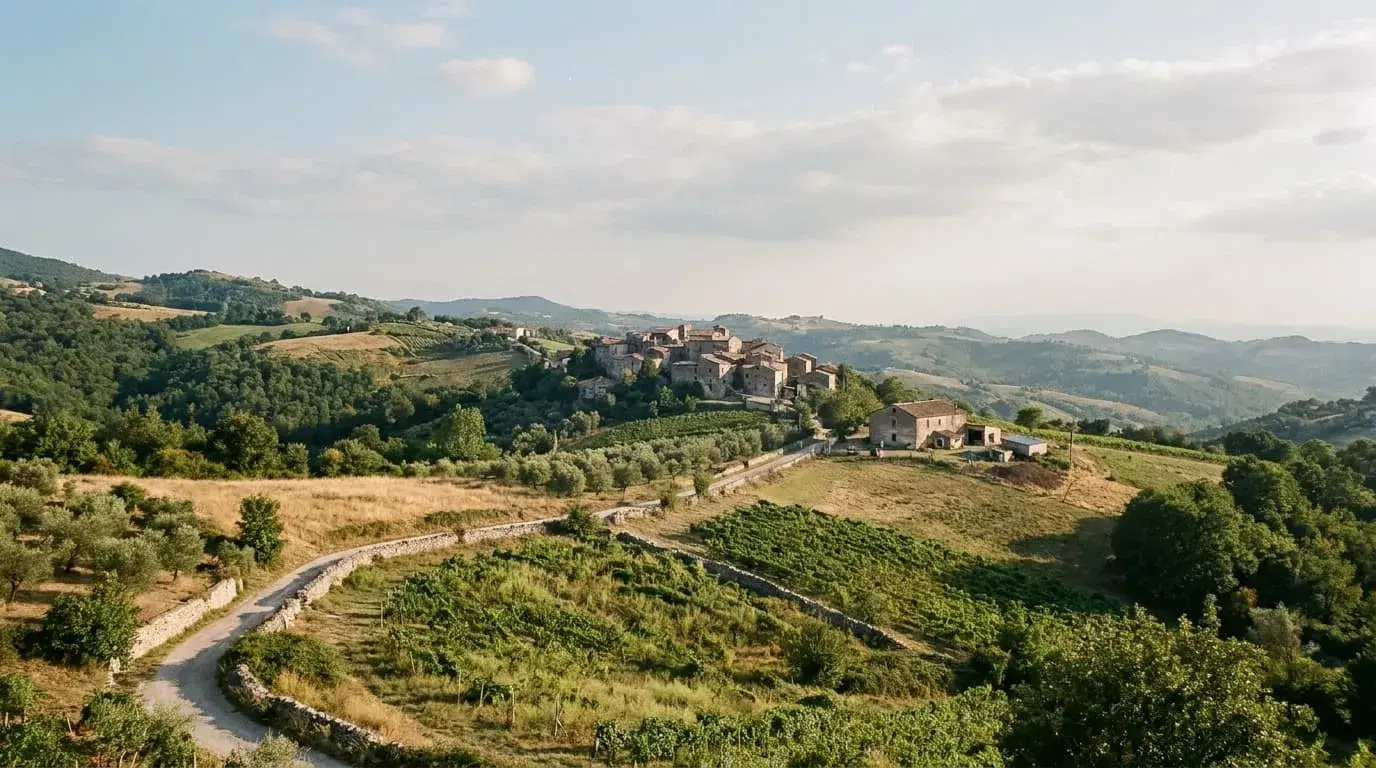
Your unforgettable Italian Journey awaits with Play Italy
Here at Play Italy, we are dedicated to transforming your exploration of Italy’s natural wonders into a seamless and unforgettable experience. Whether you’re marveling at the majestic peaks of the Dolomites, relaxing by the serene waters of Lake Como, savoring the rolling hills of Tuscany, or soaking in the stunning coastal views of the Amalfi Coast, our Travel Designer service is here to tailor your adventure to your tastes. Through a dedicated free call, you can speak directly with one of our Travel Designers and begin shaping a journey that reflects your pace, preferences, and expectations. We ensure that each moment is not just seen, but truly experienced.
For more inspiration on how to weave these natural delights into your travel itinerary, we invite you to subscribe to our Play Italy newsletter. By joining our community, you’ll receive expert travel tips, seasonal insights, and early access to what’s coming next - along with a special discount code to use on your first journey with us. If you’re considering a journey and would like to explore it with us directly, you’re always welcome to get in touch via email or WhatsApp to start a personal conversation.
Choose one of our itineraries and let Play Italy open the door to a world where each sight is a story and each landscape becomes a lasting memory. Come play with us, and let us turn your Italian holiday into a refined, meaningful experience. Your dream of Italy awaits - let’s bring it to life, together.
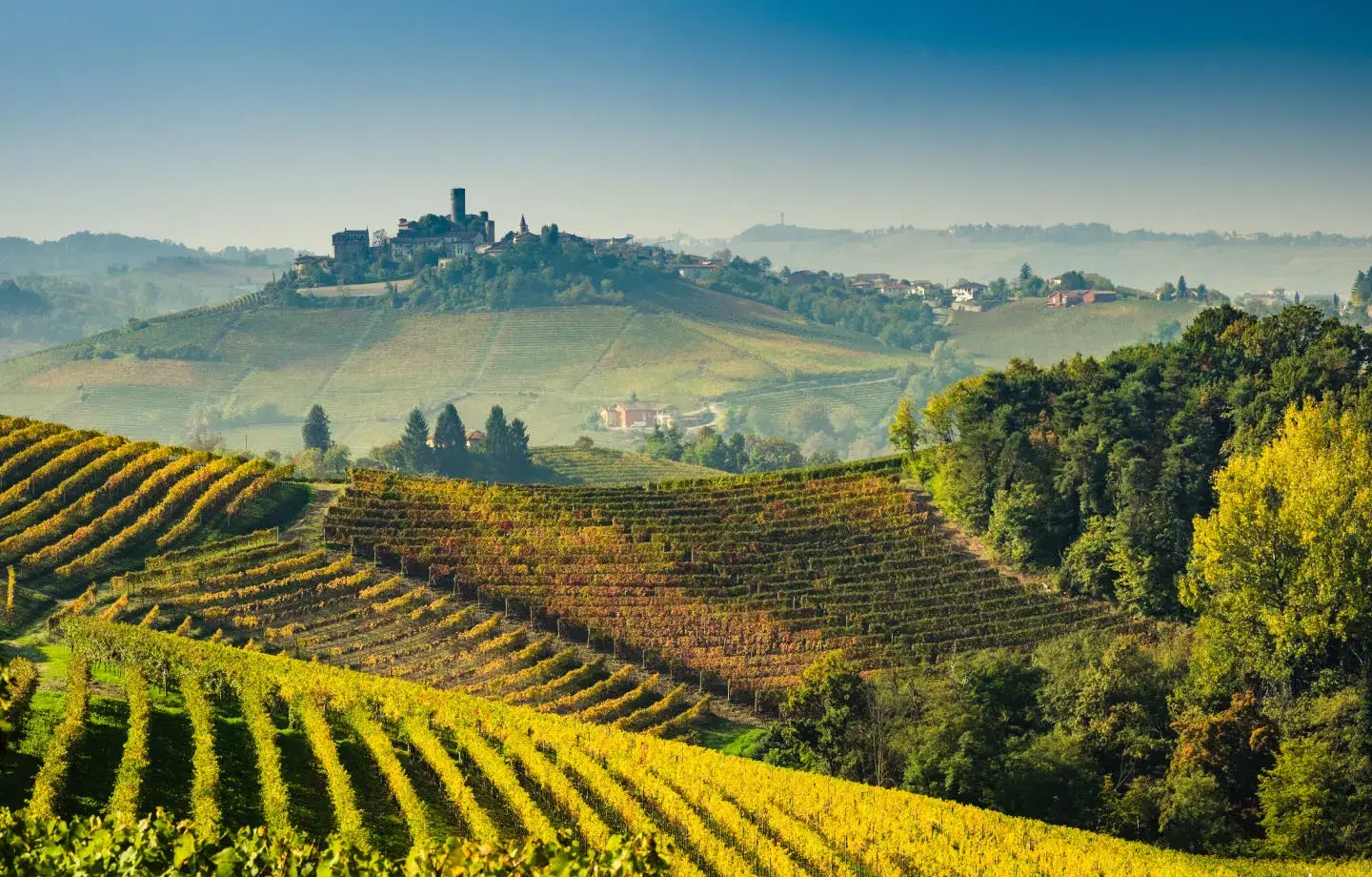
Italian Langhe Wine Tour: Barolo, Barbaresco & Luxury Experiences
4 days 3 nights
3 Destinations
From $6,817
in double room